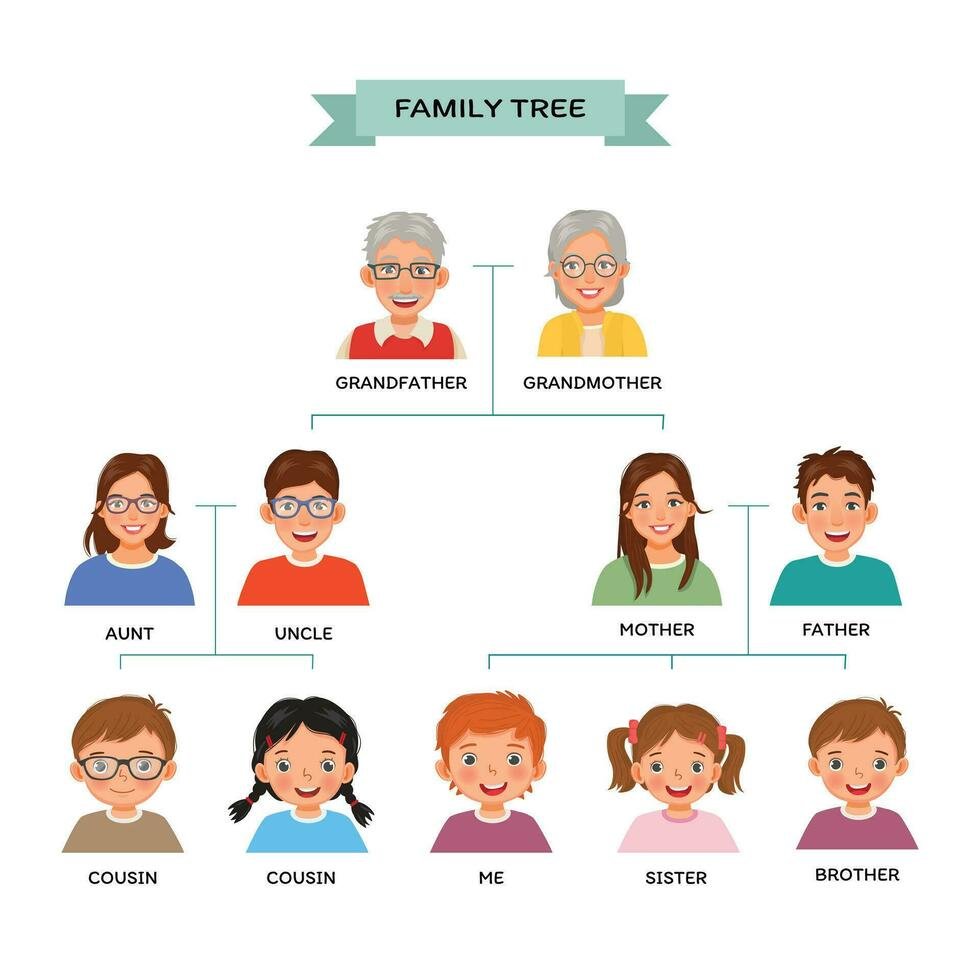
Unearthing your family’s past used to involve dusty archives, endless microfilm, and a healthy dose of luck. Today, thanks to advanced Family Tree Name Discovery Tools, tracing your lineage and finding long-lost relatives is more accessible and exciting than ever before. These powerful digital platforms transform what was once a daunting task into an engaging journey, often revealing ancestors you never knew existed with just a few clicks.
At a Glance: What You'll Discover About Finding Your Family
- Free & Powerful: Platforms like FamilySearch.org offer vast, free resources to build your family tree.
- Automated Connections: Modern tools do the heavy lifting, suggesting links and records as you input information.
- Beyond Names: Discover birth certificates, marriage licenses, census records, and even photographs.
- Verification is Key: Learn how to cross-reference and confirm discoveries with historical documents.
- Break Through Walls: Strategies to overcome common roadblocks and find elusive ancestors.
Why Dive Deep into Your Roots? More Than Just Names
Curiosity about where we come from is a fundamental human drive. It’s about more than just a list of names and dates; it’s about understanding the stories, struggles, and triumphs that shaped the people who came before you, ultimately shaping you. Knowing your ancestors can offer insights into migration patterns, cultural heritage, medical predispositions, and even family quirks that persist generations later.
Modern Family Tree Name Discovery Tools empower this journey, moving beyond simple searches to build intricate webs of connection. They don’t just present data; they help reconstruct narratives, making the past feel incredibly present. Imagine discovering a great-grandparent’s immigration record or a newspaper clipping detailing their involvement in a historical event – these are the moments that truly bring your family history to life.
The Evolution of Name Discovery: From Ledger to Algorithm
Not so long ago, genealogy was largely the domain of dedicated hobbyists and professional researchers. It involved physically visiting courthouses, libraries, and church registries, meticulously flipping through countless pages of ledgers and microfilms. Each name was a tiny victory, each connection a laborious puzzle piece.
The advent of the internet digitized much of this historical data, making it searchable. But the real game-changer came with the development of sophisticated Family Tree Name Discovery Tools. These aren't just search engines; they're intelligent systems designed to analyze vast databases, compare names, dates, and locations, and suggest potential matches you might never have found manually. They act as a virtual research assistant, tirelessly sifting through billions of records to connect the dots on your behalf.
Unpacking the Power of Family Tree Name Discovery Tools
So, what exactly do these tools do? At their core, they take the basic information you provide – perhaps your name, your parents' names, and their birthplaces – and begin a massive, automated search. They leverage algorithms to:
- Search Billions of Records: Access digitized census records, birth certificates, marriage licenses, death records, military documents, immigration papers, and more.
- Suggest Connections: Based on overlapping data points, the tools propose potential relatives and family lines. They'll often show you why they think there's a connection, citing specific records.
- Build Your Tree Automatically: As you confirm connections, the tool populates your family tree, often adding generations you weren’t even aware of.
- Gather Documents (Records): Many platforms excel at linking actual historical documents to your ancestors, allowing you to view original records like a census page or a marriage certificate. These records are invaluable for verification and add rich detail to family stories.
This interconnectedness means a single piece of information, like a grandparent's birth year, can lead to a cascade of discoveries, often guiding you to documents that recorded significant life events. The efficiency and breadth of these tools have democratized genealogy, making it accessible to anyone with an internet connection.
Your Free Gateway: Leveraging FamilySearch.org and FamilyTreeNow.com
You don't need to spend a fortune to start your genealogical journey. Two standout platforms offer incredible resources for free, making them ideal starting points for anyone interested in Family Tree Name Discovery Tools.
FamilySearch.org: A Treasure Trove at No Cost
FamilySearch.org stands as a giant in the world of free genealogy. It offers unparalleled access to historical records and resources, making it a must-use for any aspiring family historian.
- Billions of Ancestor Profiles and Documents: Imagine searching through countless birth records, marriage licenses, death certificates, census documents, and immigration papers from around the globe. FamilySearch.org provides just that, with billions of profiles, photographs, and historical documents readily available.
- Automated Tree Builder: Not sure where to start or who to search for? The platform's automated tree builder is your guide. As you add initial information—perhaps a grandparent or great-grandparent—the system actively searches for ancestor connections, suggesting matches and helping you expand your tree effortlessly.
- Record Gathering: One of FamilySearch's most powerful features is its ability to gather important documents (records) that recorded life events. These aren't just abstract data points; they're primary sources that help tell compelling family stories and verify connections. You can search all records directly.
- Guidance and Resources: FamilySearch isn't just a database; it’s a comprehensive learning hub. It provides guidance and resources for making a family tree or searching for ancestors, allowing you to choose activities based on your interests. Free online consultations are even available if you hit a snag or need personalized advice.
- Save Your Progress: Every new discovery can be saved, building upon your work and facilitating future exploration. Access to FamilySearch means your genealogical progress is always at your fingertips.
FamilyTreeNow.com: Quick Lookups and Initial Trails
While perhaps not as comprehensive as FamilySearch.org for deep genealogical dives, FamilyTreeNow.com offers a valuable starting point, especially for quick lookups.
- Free Public Records Lookup: This site allows users to look up anyone and research their family tree and genealogy for free. It can be particularly useful for finding basic information on living individuals (often publicly available data) that can then serve as a launching pad for deeper research on their ancestors.
- Initial Verification: If you have a name and want to see if any basic public records pop up, FamilyTreeNow can provide a quick initial check. It's a useful tool for cross-referencing or getting a preliminary sense of available data before diving into more structured tree building.
Together, these free Family Tree Name Discovery Tools provide a powerful foundation for anyone beginning their journey into family history.
Starting Your Discovery Journey: A Step-by-Step Guide
Ready to begin uncovering your family’s past? Here’s a practical, step-by-step approach using the best Family Tree Name Discovery Tools available.
1. Gather What You Know: Your Personal Data Cache
Before you click a single button, start with what's readily available.
- Interview Relatives: Talk to parents, grandparents, aunts, and uncles. They are living archives! Ask for full names, birth dates, places of birth, marriage dates and places, death dates and places for as many direct ancestors as possible. Ask for stories, too – these add color and context.
- Collect Existing Documents: Dig out old family Bibles, photo albums (look for names and dates on the back!), birth certificates, marriage licenses, death certificates, obituaries, military discharge papers, and even old letters. These are goldmines of verifiable information.
- Write It Down: Organize this initial data. A simple spreadsheet or even a physical notebook works. The more accurately you input your starting data, the better the tools can perform.
2. Pick Your Platform (and Why Free is Fantastic)
For most beginners, starting with a free platform is the smart move. Given its robust features and vast database, FamilySearch.org is highly recommended as your primary tool. You can always export your tree and upload it to other services later if you wish.
3. Inputting Your First Names: The Crucial Starting Point
This is where the magic begins.
- Start with Yourself: Input your full name, birth date, and birthplace.
- Move to Direct Line: Add your parents, then their parents (your grandparents), and so on. Focus on entering full names, as accurate dates and places as possible.
- Be Consistent: Use consistent formats for dates (e.g., DD Month YYYY or YYYY-MM-DD) and spell names exactly as you know them, even if you suspect a misspelling. You can address variations later.
- Don't Guess: If you don't know a piece of information, leave it blank rather than guessing. Incorrect data can send the algorithms down the wrong path.
4. Letting the Algorithms Work Their Magic
Once you've entered your initial data, Family Tree Name Discovery Tools like FamilySearch.org will begin to work their wonders.
- "Hints" and "Record Matches": Look for these indicators on your tree. The platform will automatically scan its billions of records and suggest potential matches for your ancestors. These hints might point to a census record for your great-grandparents or a marriage certificate for a great-aunt.
- Review and Attach: Carefully review each hint. Does the information match what you know? Does it make sense? If it looks correct, you can "attach" the record to your ancestor’s profile, instantly adding more details and often linking to new relatives. This is how your tree rapidly expands.
- Automated Tree Building: As you add information and confirm records, the platform’s automated tree builder will continue to guide you, searching for ancestor connections and suggesting new branches.
5. Verifying Your Finds: The Journalist's Golden Rule
Just like a good journalist, you need to verify your sources. Not all hints are perfect, and mistakes can happen.
- Seek Multiple Sources: Don’t rely on a single hint. If a tool suggests a birth date, try to find a birth certificate and a census record that corroborates it.
- Look for Original Records: Whenever possible, view the actual digitized document (e.g., a census image, not just a transcription). Transcriptions can have errors. Seeing the original handwriting can also provide clues (e.g., a "Jr." that wasn't transcribed).
- Check Context: Does the information fit the known history of the family or the location? An ancestor born in the 1700s in Texas might be suspicious if Texas wasn't settled by Europeans at that time.
This verification process is crucial for building a trustworthy and accurate family tree.
Beyond the Basics: Advanced Strategies for Stubborn Branches
Even the best Family Tree Name Discovery Tools can hit a "brick wall." Here are some advanced strategies to help you break through.
The Power of Place and Time
Genealogy isn't just about names; it's about people in a specific place at a specific time.
- Contextual Research: If your ancestor lived in a small town, research the town's history. Were there major employers? Specific immigrant communities? This context can reveal new avenues of research, like church records or local historical society archives.
- Migration Patterns: People moved for reasons – land, work, family. Understanding historical migration patterns (e.g., the Great Migration in the US, or European emigration waves) can help you predict where your ancestors might have come from or gone to.
- Boundary Changes: Borders change over time! A town once in one county might now be in another. Knowing this is critical for finding records.
Unusual Spellings and Nicknames
Ancestors often had names recorded phonetically by clerks, or they used nicknames.
- Soundex/Phonetic Searches: Many Family Tree Name Discovery Tools offer "Soundex" or phonetic search options that will find names that sound similar even if spelled differently (e.g., "Smythe" for "Smith").
- Wildcard Searches: Use asterisks () or question marks (?) in your searches to stand in for unknown letters (e.g., "Smth" might find Smith, Smythe, Smath).
- Common Nicknames: Research common nicknames for given names (e.g., "Polly" for Mary, "Hank" for Henry).
Community and Collaboration
You are not alone in your research!
- Genealogical Forums and Groups: Join online forums or local genealogical societies. Other researchers might have expertise in your specific geographic area or family lines.
- DNA Testing (Briefly): While not strictly a "name discovery tool," DNA testing can identify genetic cousins, who may have already built their family trees and hold key information or documents about shared ancestors.
- When to Consider a name trace generator: For particularly challenging cases where traditional record searches hit a dead end, specialized tools designed to trace name variations and linkages across complex datasets can be invaluable. Sometimes, you need a different angle, and a dedicated name trace generator can provide that unique perspective, helping untangle tricky lineage puzzles that generic searches might miss. These specialized resources go deeper, using sophisticated algorithms to identify patterns and connections in disparate records that might not be immediately obvious.
Common Roadblocks and How to Navigate Them
Even with the best Family Tree Name Discovery Tools, you'll encounter challenges. Here's how to address them head-on.
Privacy Concerns with Living Relatives
Q: Why can't I find information on living people as easily as deceased ancestors?
A: Most reputable genealogy sites prioritize privacy. Information on living individuals is typically restricted to protect their privacy. You'll primarily find information on deceased ancestors through public records. Websites like FamilyTreeNow.com might show publicly available data on living individuals, but this is usually limited to what's already in the public domain. Focus your deep research on those who have passed.
Conflicting Information
Q: What do I do if two records for the same person show different birth dates?
A: This is common! Prioritize primary sources (e.g., a birth certificate vs. a census record where age might have been rounded or estimated). Look for patterns. Was one date consistently used by the person throughout their life? Document all conflicting information and explain your reasoning for choosing one over another. Sometimes, both might be incorrect, leading you to search for another record.
"Brick Walls" – When You're Stuck
Q: I've hit a "brick wall" – I can't find any more information on an ancestor. What now?
A:
- Go Sideways: Research siblings, aunts, uncles, and cousins. Their records often mention parents or places that can break your wall.
- Research the Neighbors: In historical records like census reports, families often lived near relatives or people from their home country.
- Widen Your Search: Broaden your search by year or location. Try surname variations.
- Consult Experts: Use the free online consultations offered by FamilySearch.org. Sometimes another pair of eyes, especially an expert's, can spot something you missed. Also, exploring a name trace generator could offer a new analytical approach to unstick your research by highlighting obscure connections or patterns.
The Myth of Perfect Records
Q: Are all historical records accurate?
A: No. Records can contain errors due to misremembered information, clerical mistakes, phonetic spellings, or even deliberate falsehoods (e.g., lying about age to enlist). Always view records critically and seek corroborating evidence. The goal is to build a case with the strongest available evidence, not necessarily find an unblemished, perfect record. Remember, a tool like a name trace generator might help identify recurring patterns or inconsistencies that can guide further investigation.
The Human Element: Stories Behind the Names
While Family Tree Name Discovery Tools are about names and dates, the ultimate reward is discovering the stories behind them. Every name represents a life lived, a journey undertaken, and experiences that shaped the world. From the thrill of finding a long-lost cousin to uncovering a compelling narrative about your ancestors' resilience, these tools bridge the gap between abstract data and deeply personal history.
Imagine reading a ship's manifest with your great-great-grandparent's name, seeing their age and occupation as they embarked on a new life. Or finding a land record that details how your family acquired property. These moments connect you directly to their struggles and triumphs, providing a profound sense of identity and belonging. The journey of discovering these names is often a journey of self-discovery too.
Ready to Uncover Your Ancestral Narrative?
The power of modern Family Tree Name Discovery Tools is immense and, as we've seen, often entirely free to access. There's never been a better time to embark on this fascinating journey into your past. Whether you're just starting with a few family names or you're a seasoned genealogist hitting a snag, platforms like FamilySearch.org and FamilyTreeNow.com, combined with smart search strategies and perhaps even a specialized name trace generator for complex cases, offer the keys to unlocking generations of your family's history.
Don't let the vastness of the task intimidate you. Start small, gather what you know, and let these incredible tools guide you. Each name discovered, each document uncovered, is another thread woven into the rich tapestry of your family story. Begin your adventure today and connect with the remarkable individuals who made you, you. You might be surprised at what — and who — you find. If you’re ever stuck and need a more targeted approach, consider if a name trace generator could pinpoint elusive connections.